The Hand
Written in thread
So much of what is sold as chikankari today is made in a hurry. NAZMEVA exists for the other kind: the kind that takes fifteen days, or three months, and is worth it.
- Every piece is embroidered by hand.
- By karigars in Lucknow and the villages around it.
- Between fifteen days and three months on the frame, as long as its detail asks.
From drawing to piece number
01
Drawn
The motif is drawn and carved into wooden blocks.
02
Printed
The outline is block-printed onto the cloth in a colour that washes out.
03
On the frame
The cloth goes onto the frame and is embroidered by hand, stitch by stitch.
04
Washed
The piece is washed to lift the printed outline, leaving only thread.
05
Finished
It is finished, pressed, checked and given its piece number.
Close to the cloth
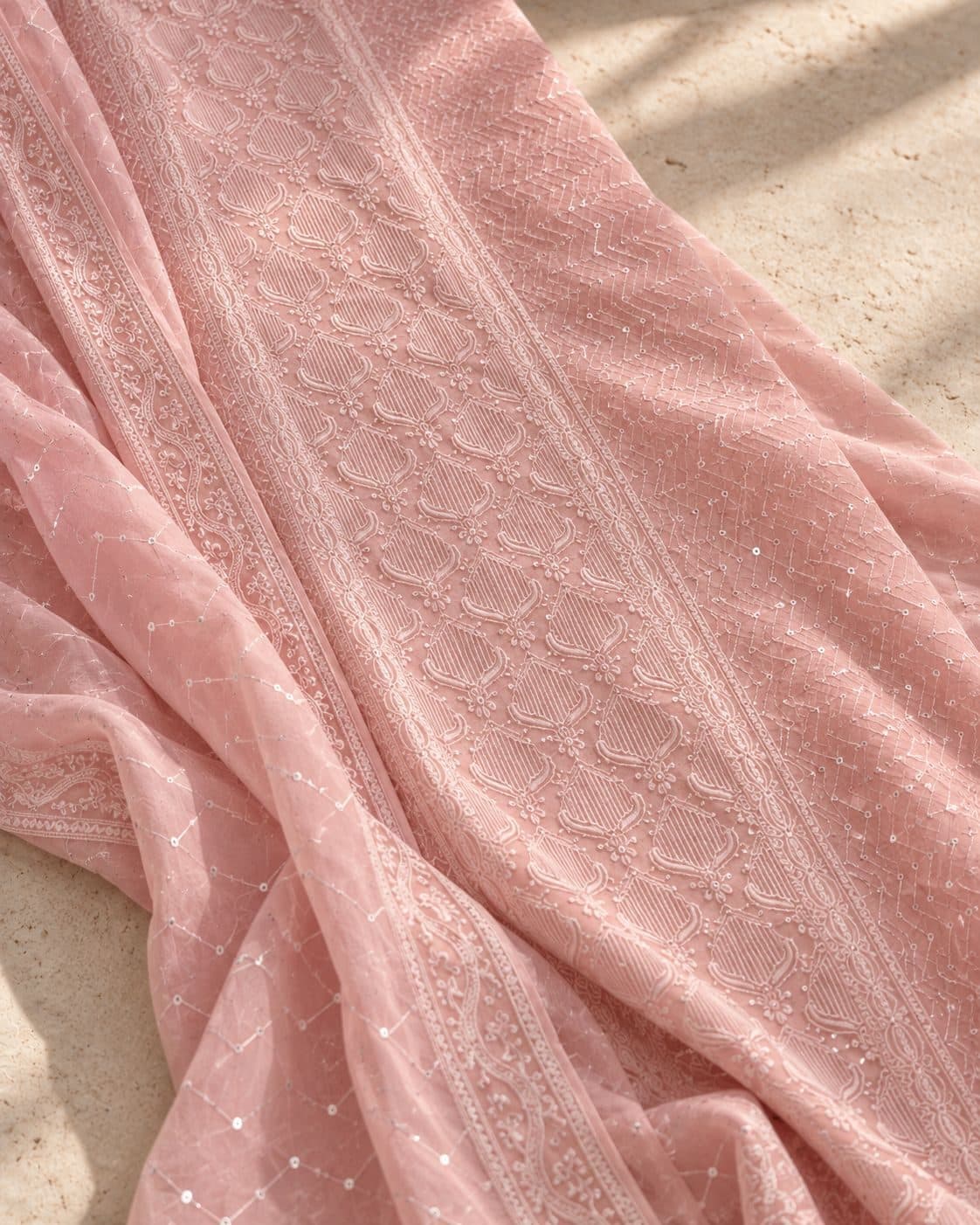
Dastaan
Close enough to count the thread.
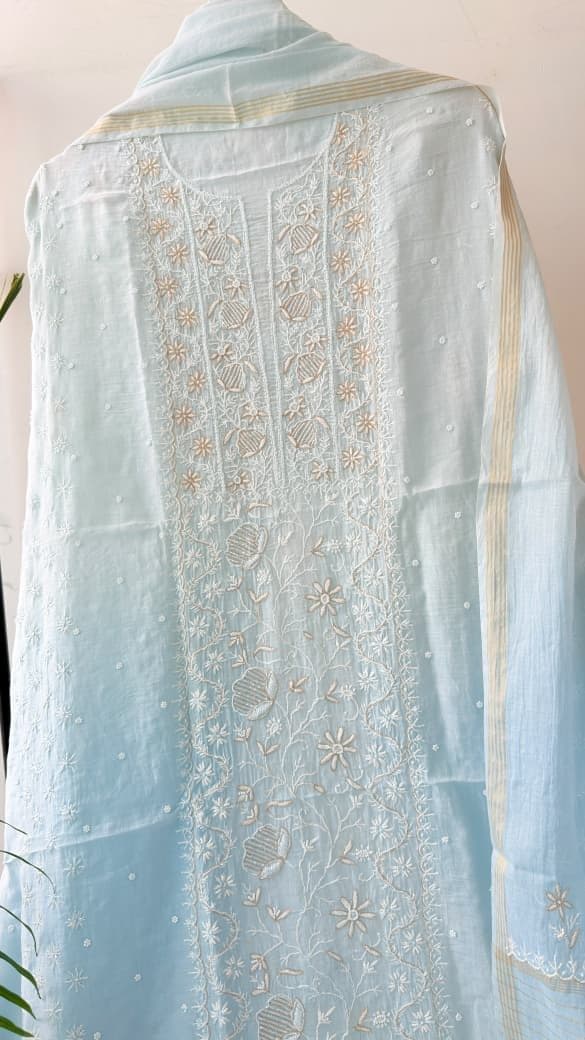
Falak
Ivory and brass thread on blue, worked down the front.
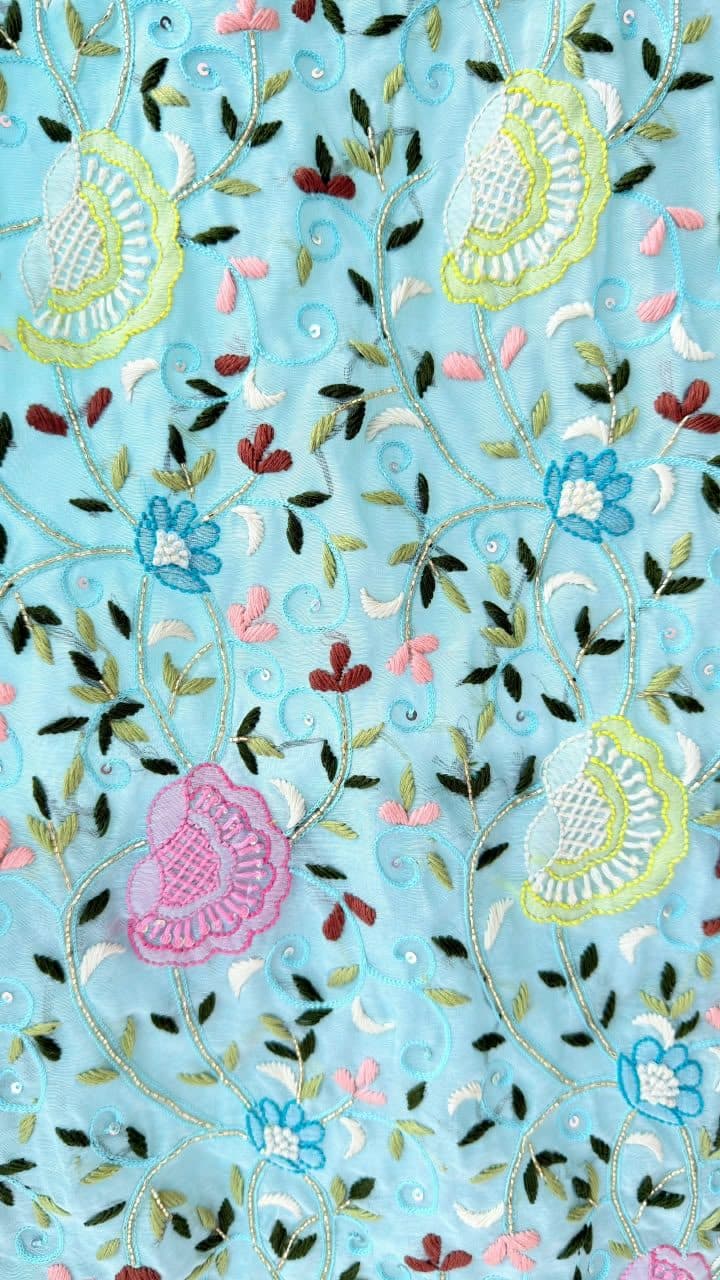
Firoza
Twelve colours of thread. None of them loud.
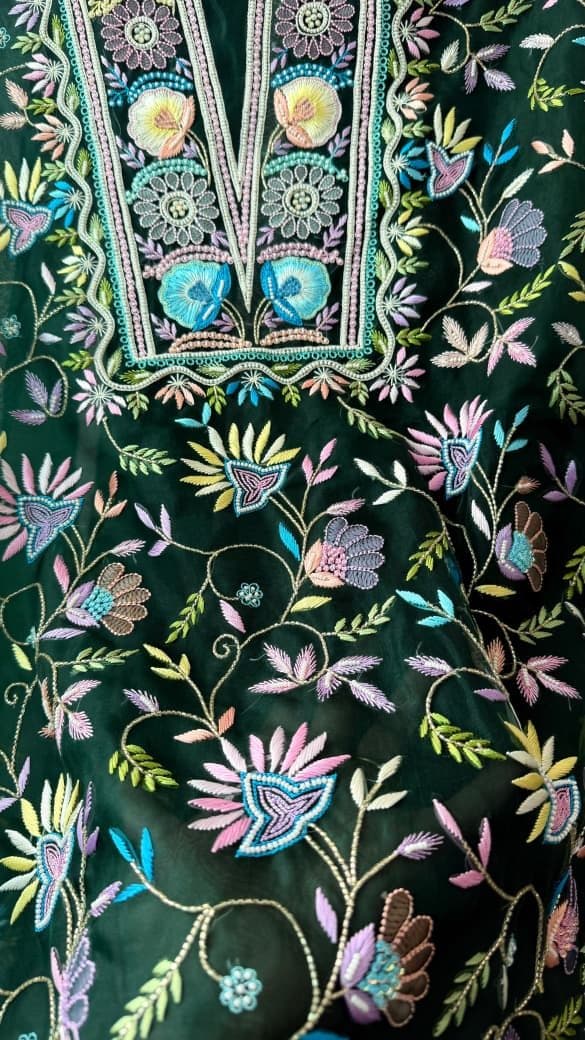
Zamurrad
Rose and sky on emerald. The neck took the longest.
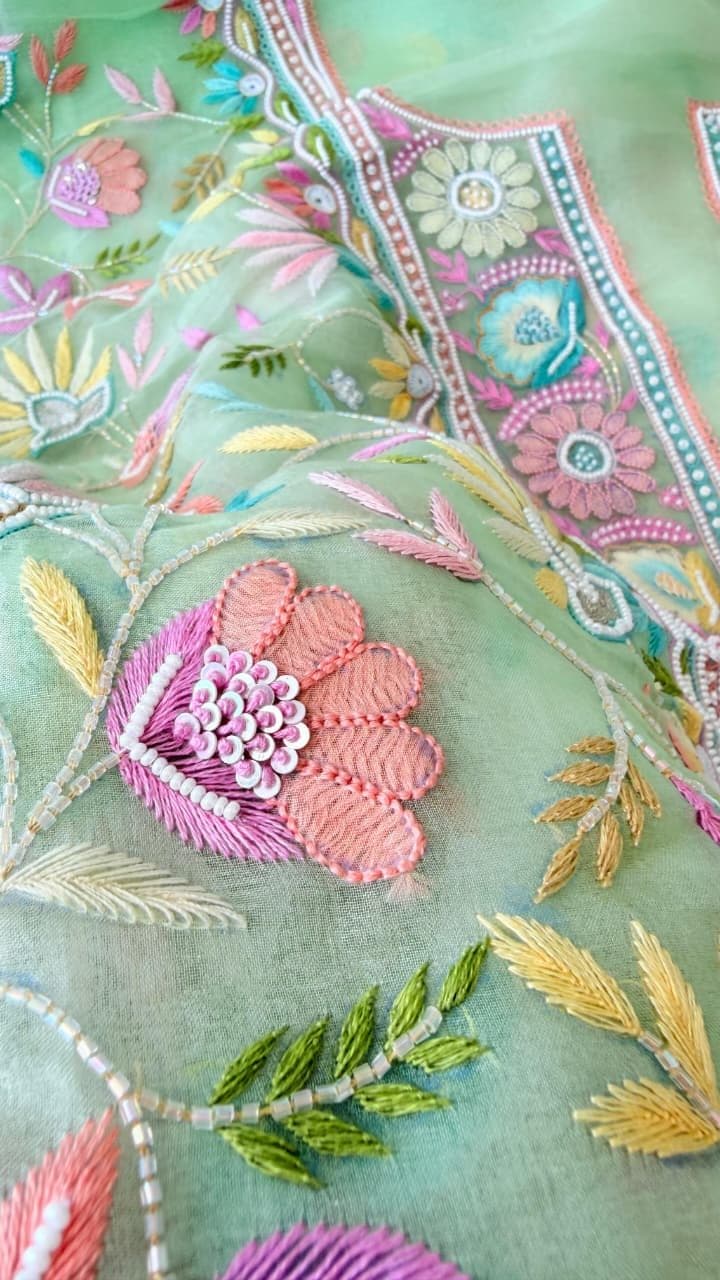
Dhaani
Petals raised off the cloth. Each one placed by hand.
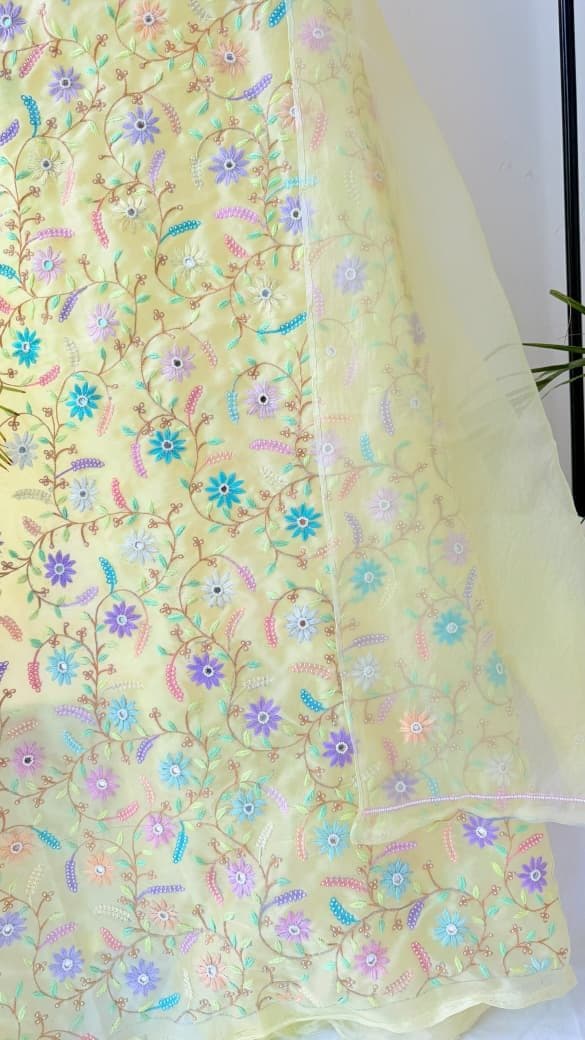
Basant
Lilac, teal and rose, scattered on yellow.
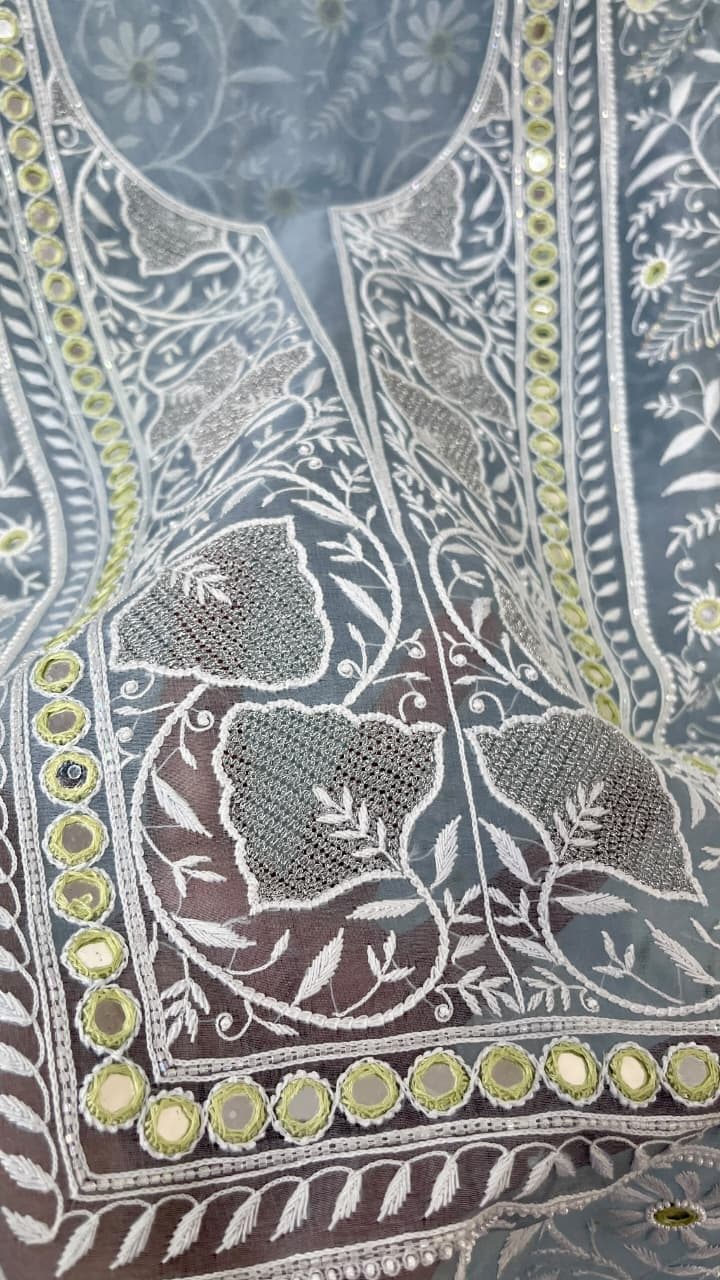
Aaina
Mirrorwork, kept to the neck so it stays a whisper.
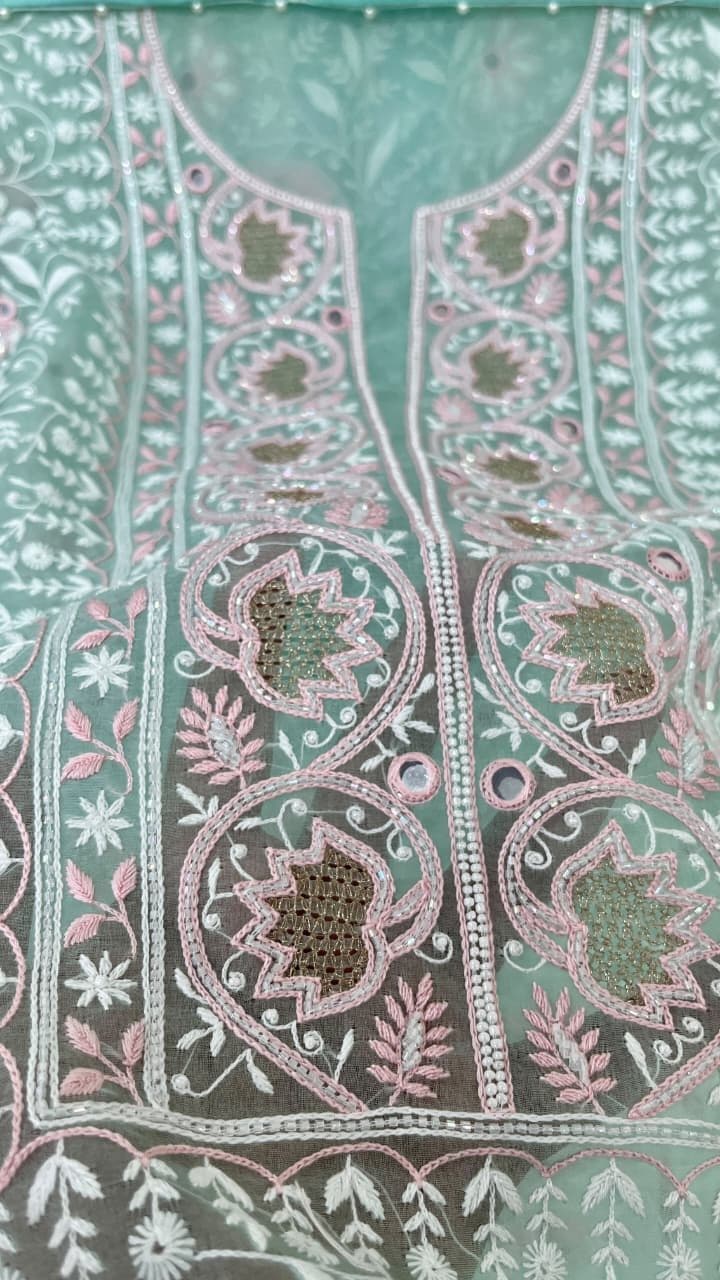
Gulshan
A flower at the neck, worked in four colours of thread.
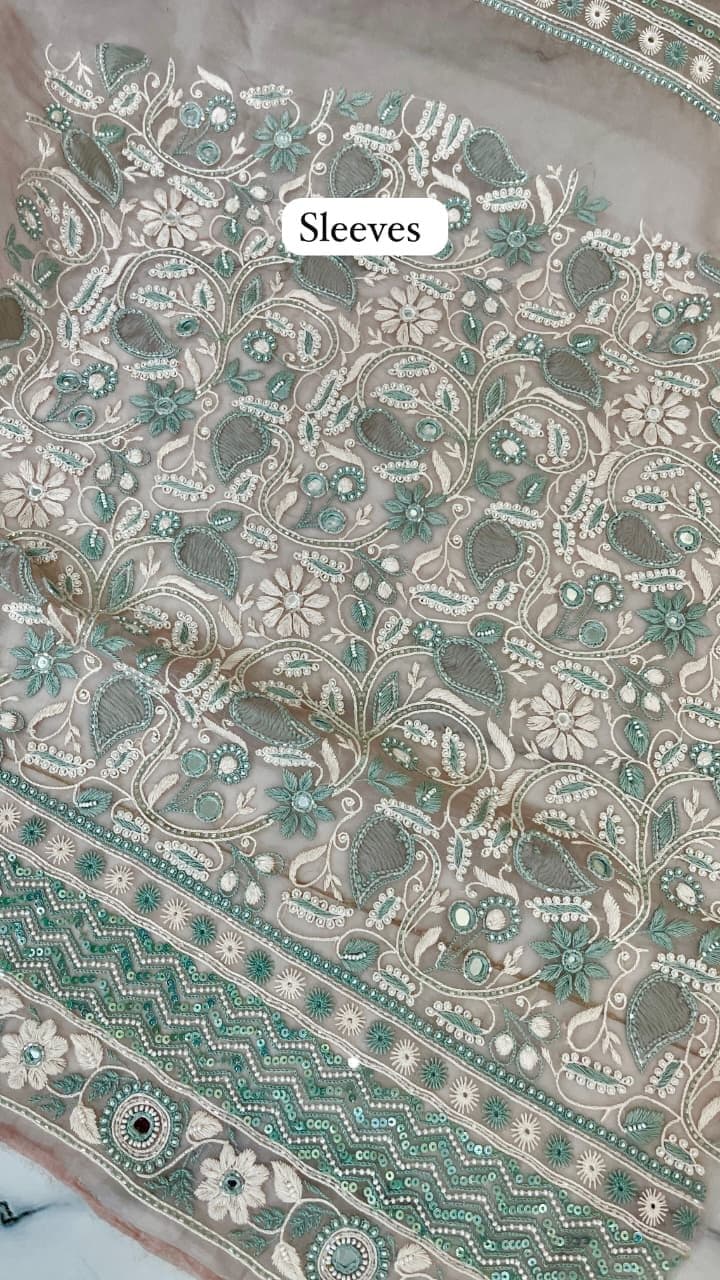
Shaam
Sage and rose on organza. The thread does the colouring.
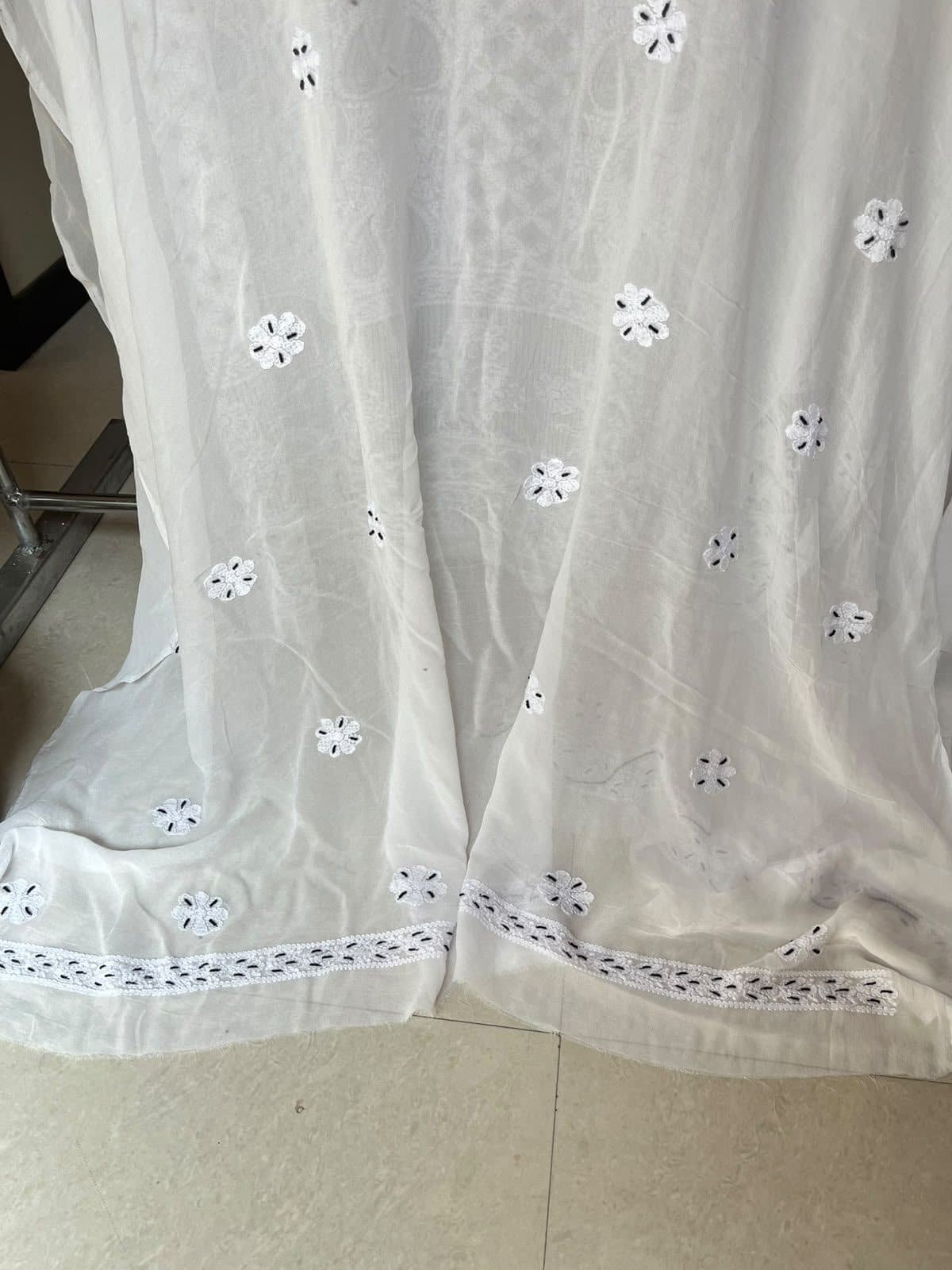
Sukoon
A motif every hand's width. No more.
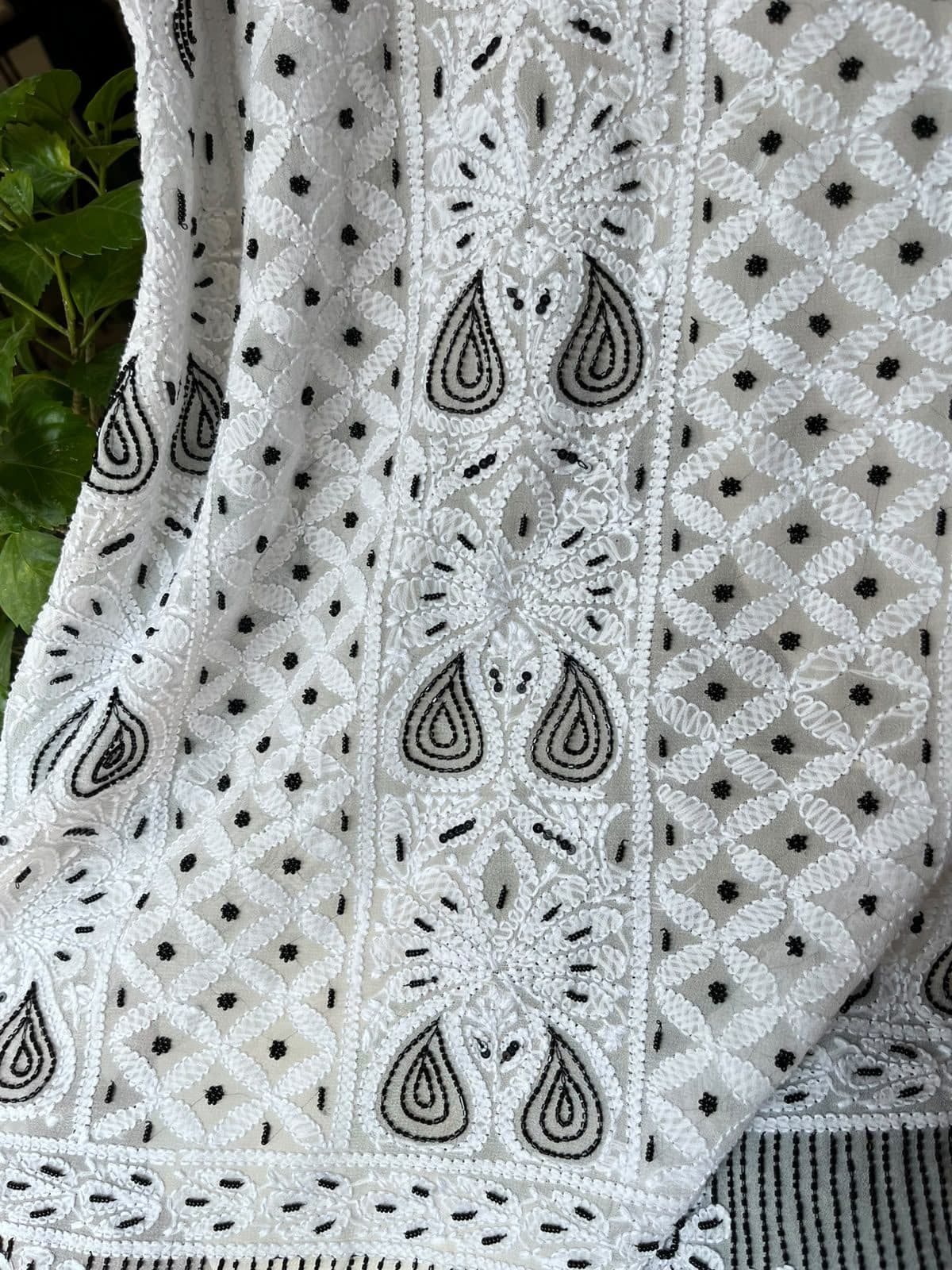
Qalam
Ink on ivory, the paisley repeated until it becomes rhythm.
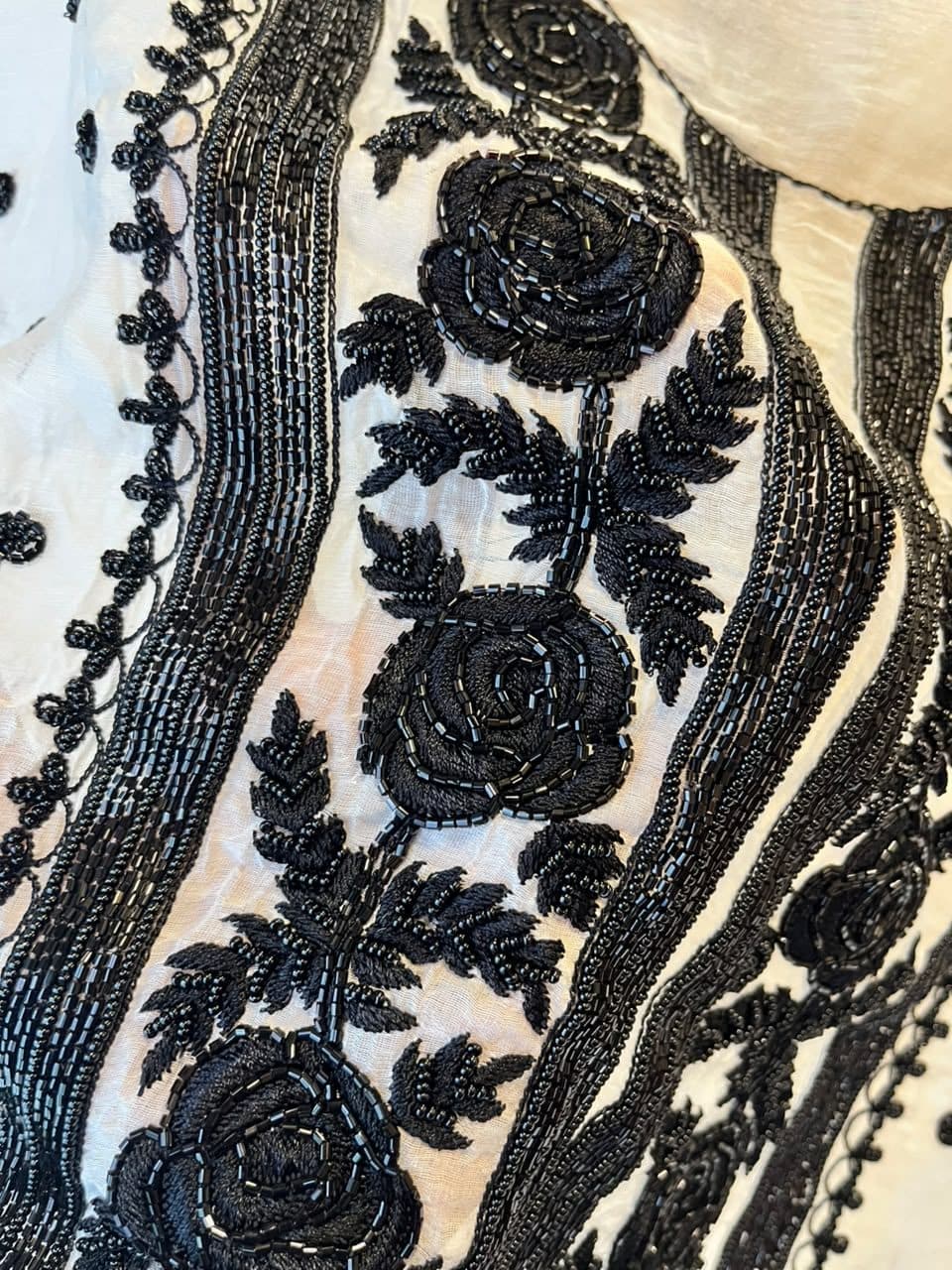
Siyahi
Beadwork, rose by rose.
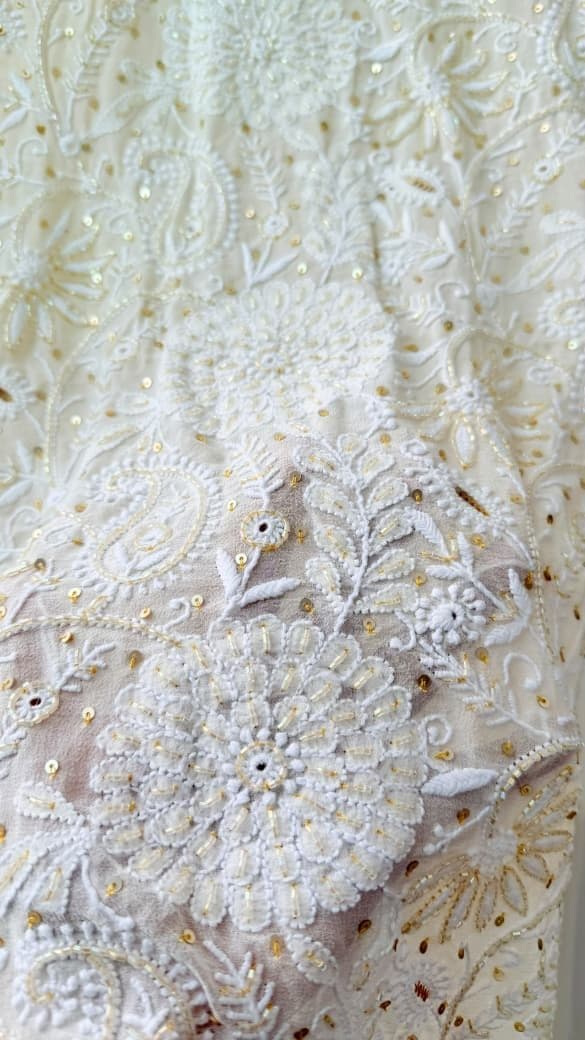
Noor
Brass, used the way the house uses it. Sparingly.
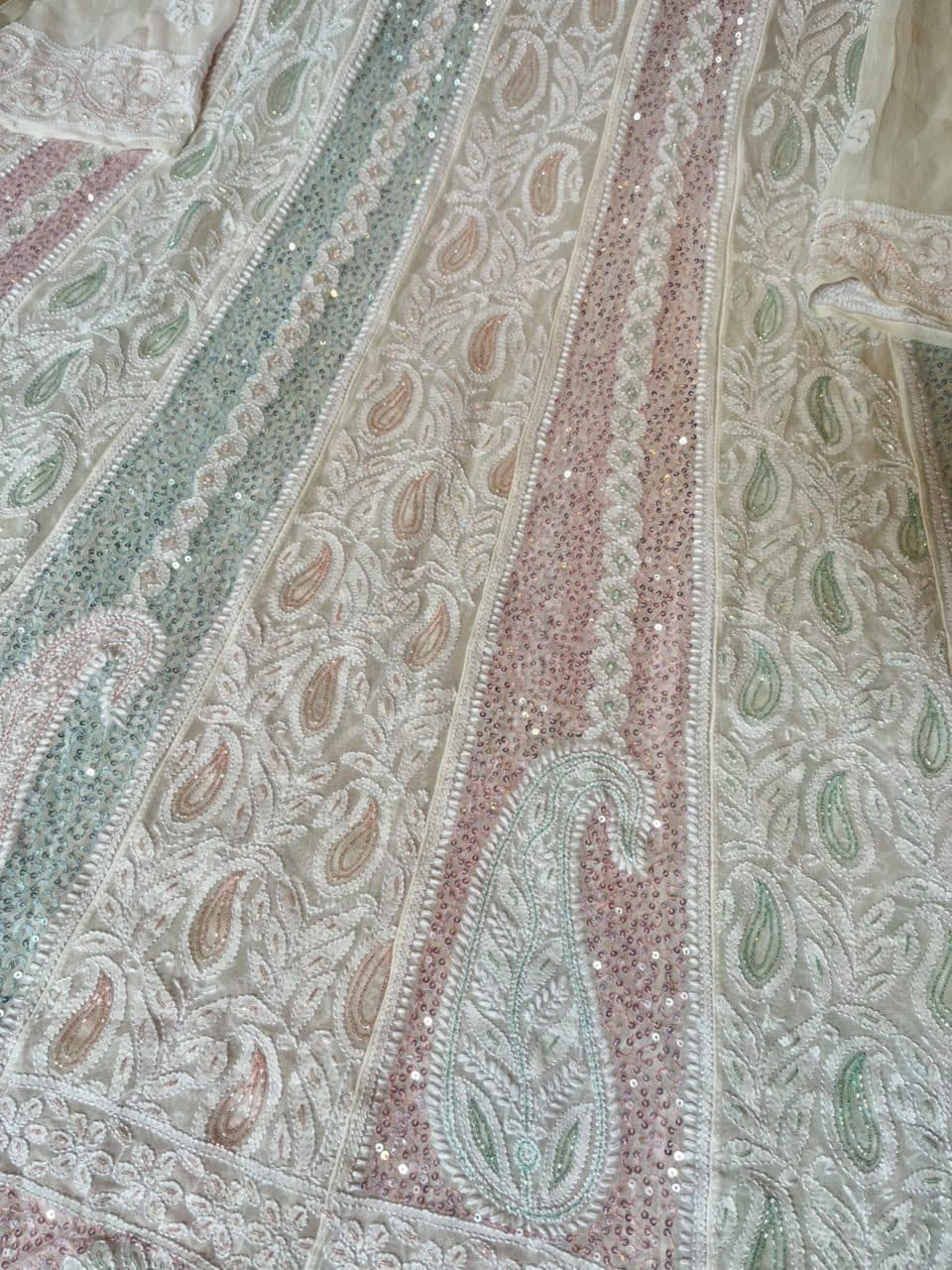
Nazakat
Rose, sage and ivory, worked into one panel.
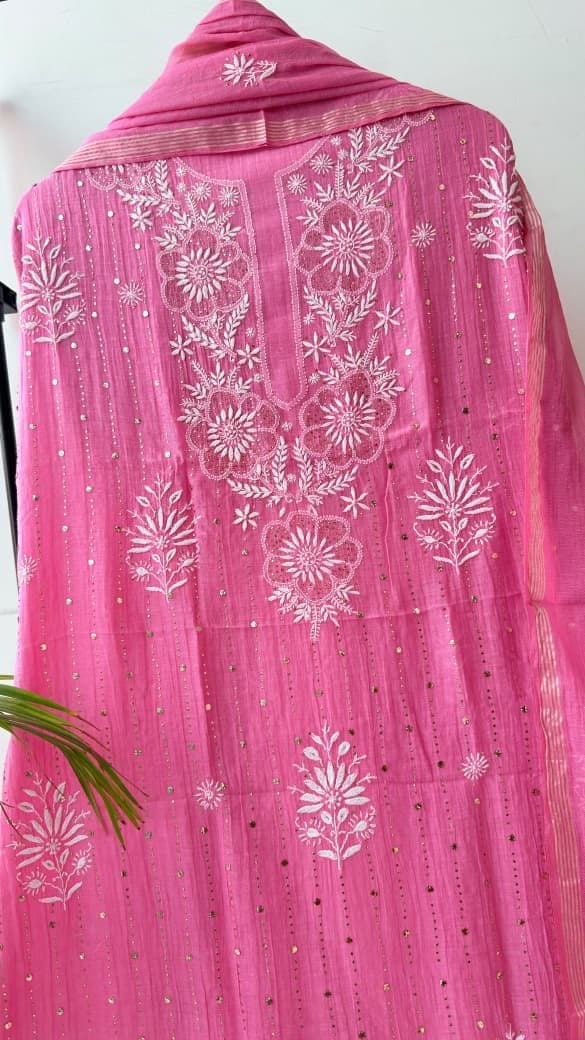
Shokh
White thread on pink. The oldest pairing in Lucknow.
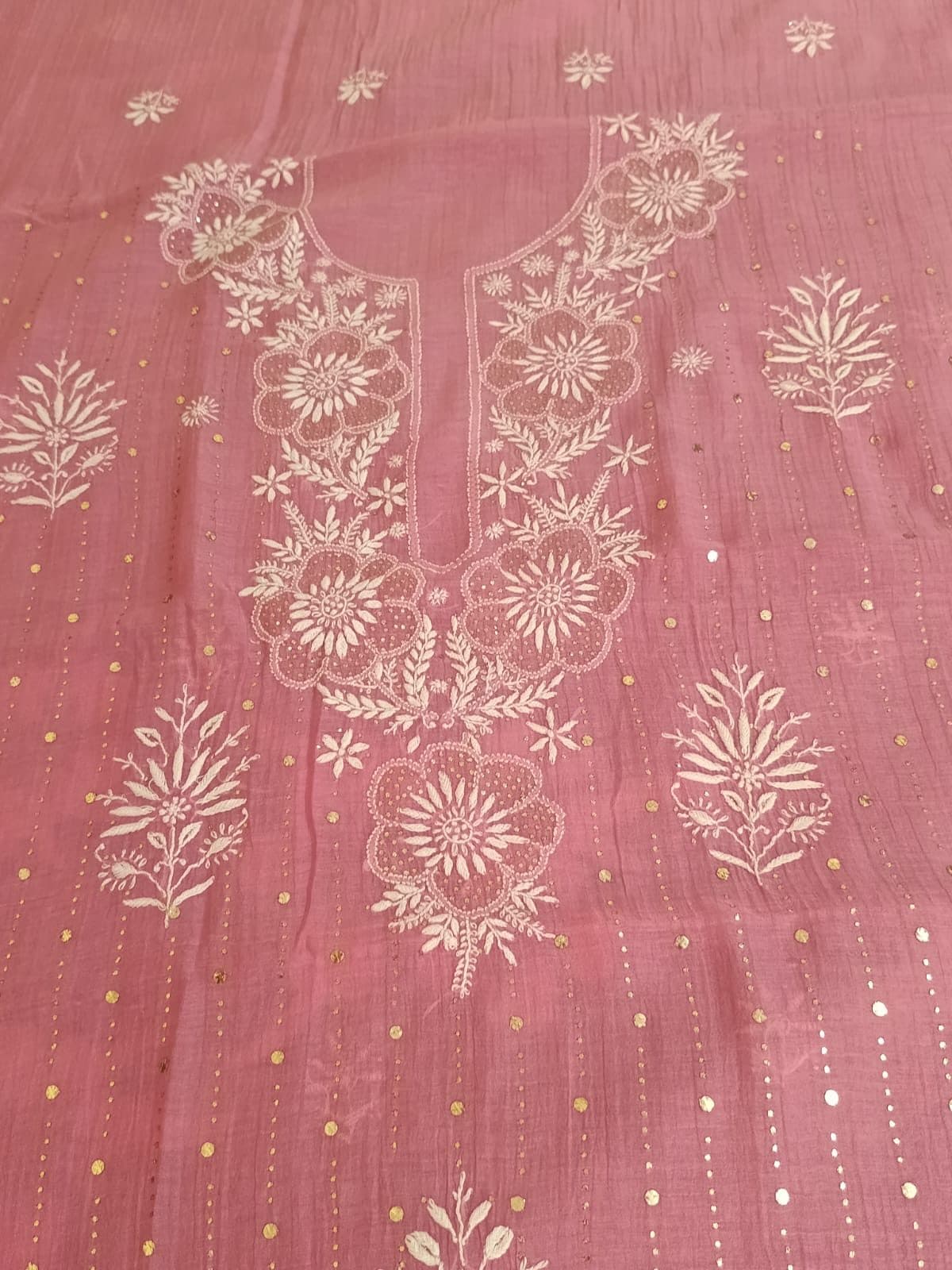
Shafaq
Sequins, placed where the thread pauses.
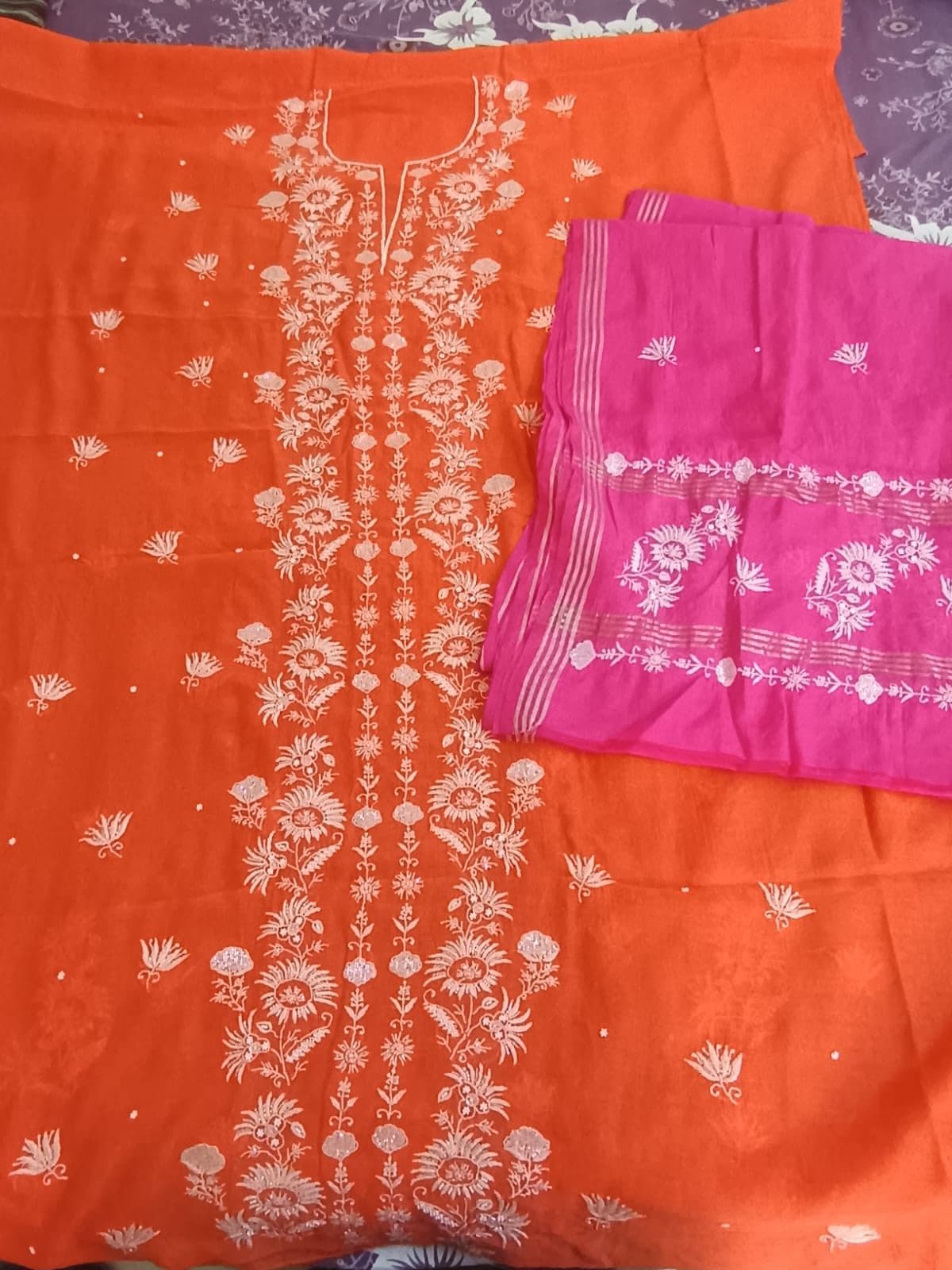
Zafraan
The panel runs the full length. So does the patience.
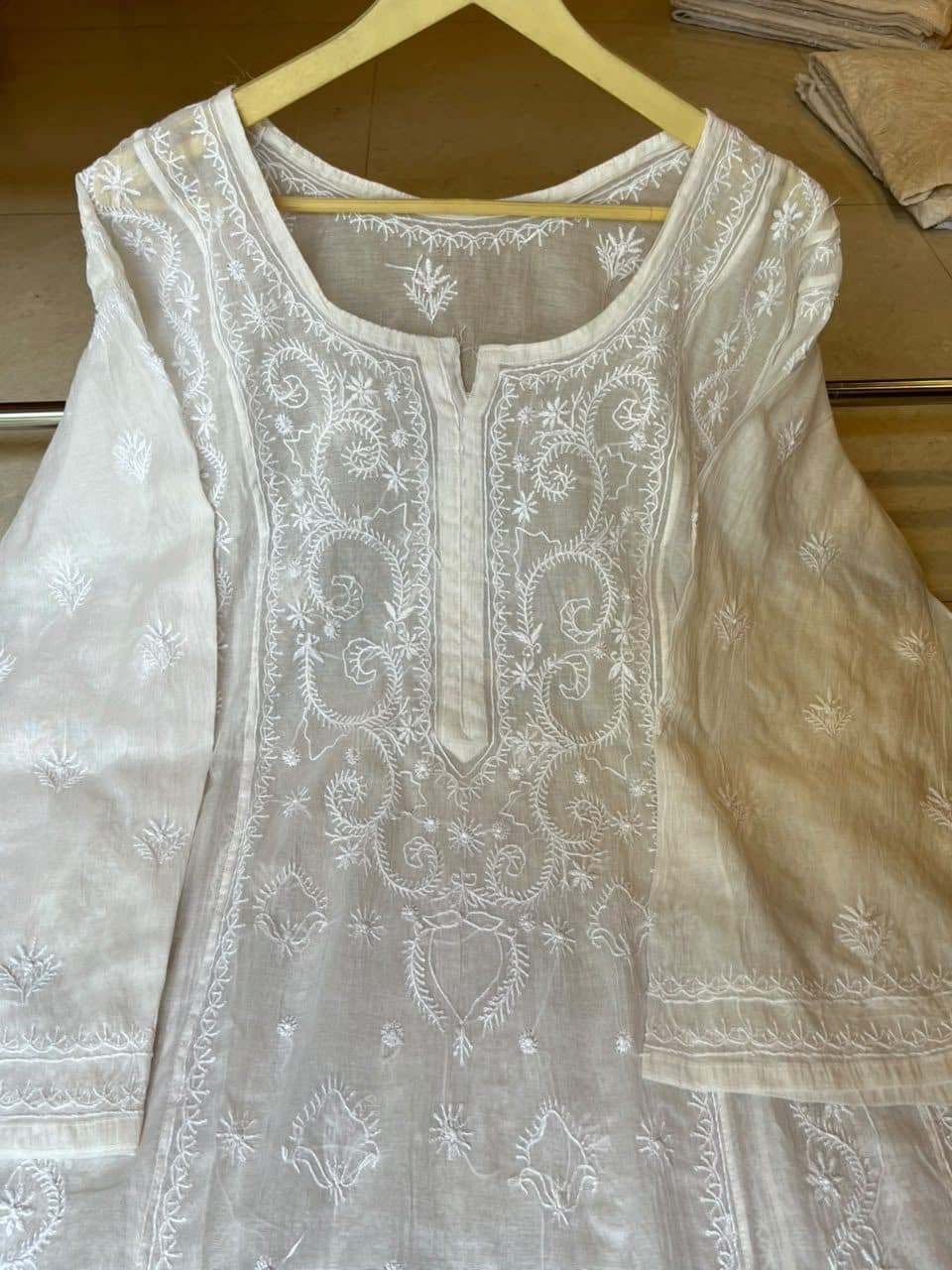
Saadgi
Jaali, worked from the back so the front stays calm.
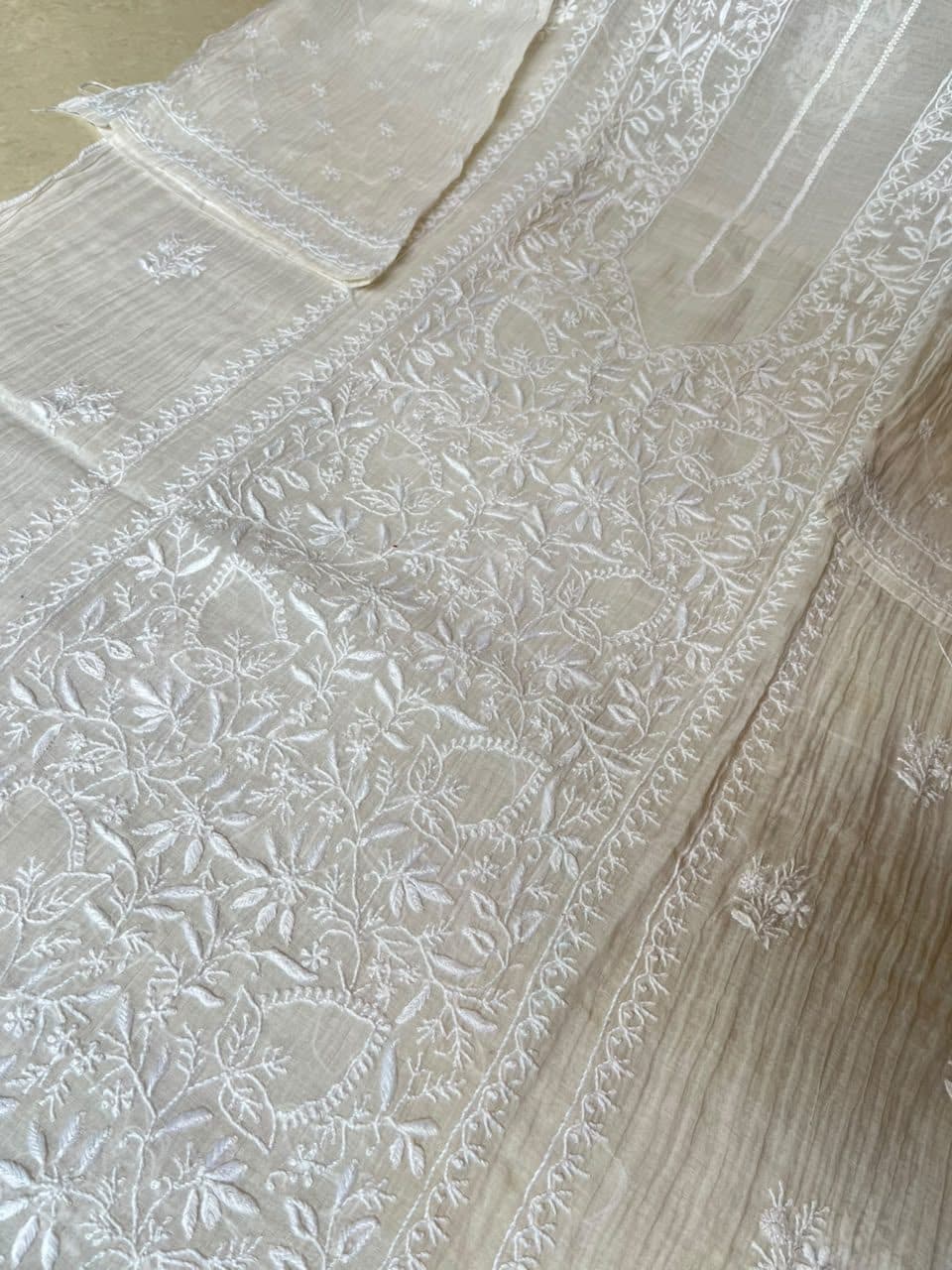
Sahar
Every leaf is a decision made by hand.
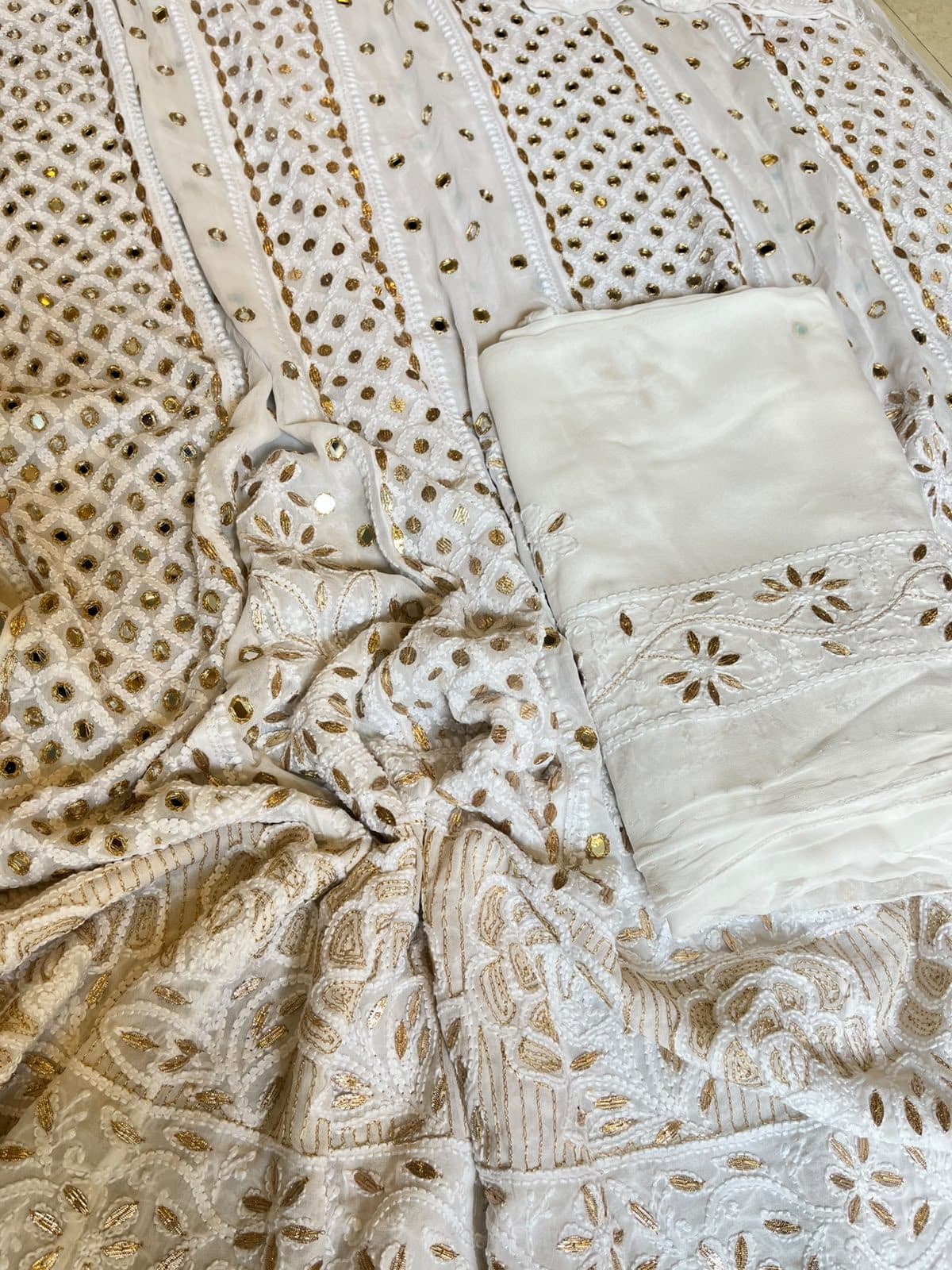
Mehtaab
Mukaish, set one dot at a time.